WhatsApp

Petit Lenormand: How to Choose and Use the Significator in Your Readings

alternative
INTRODUCTION

In the practice of Petit Lenormand, one of the first decisions you will need to make during a reading is the choice of the Significator. But what exactly is it? The Significator is a specific card designated to represent the querent or the main subject of the question asked.

Why is it so important? Simply because this card will become the focal point of your reading. It guides your spread and allows you to focus your interpretation around a specific theme. Without a Significator, the reading can lack focus, especially if you are a beginner trying to understand the different interactions between the cards.

In this article, you will learn how to choose the ideal Significator based on the situation you are exploring. Whether it is for a love, professional, or personal question, there are simple tips to identify the card that will play this key role. You will also discover why a good choice of Significator can make all the difference in your reading and how to use it to guide the interpretation of the surrounding cards.

Haut

The Concept of the Significator: The Master Card

Summary :

The significator is the master card serving as the central reference point to represent the querent or the main subject of the spread.

The Concept of the Significator: The Master Card

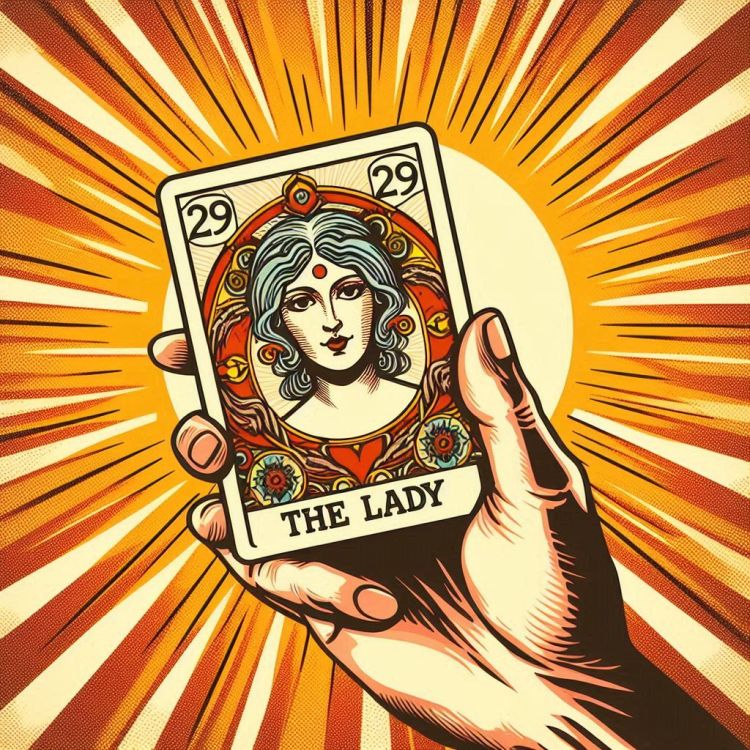
The Significator, sometimes also called the « master card », holds a fundamental place in the practice of the Petit Lenormand. It represents either a specific person (the querent or a third person), or the central theme around which all interpretation is organized. Traditionally, we use the cards 28 The Gentleman for a male querent and 29 The Lady for a female querent, but these « character-cards » are only the starting point of the reading.

Consider the Significator as a true anchor point or compass in your spread. Its role is to give strict framework to the interpretation of the other cards around it. What makes the Lenormand system unique is that this card is never isolated: its value and meaning depend entirely on the context formed by the neighboring cards.

According to the nature of your question, you can adapt the choice of this master card:

  • The Person Significator: Used for general questions, it represents the querent in their overall life.
  • The Thematic Significator: Used for targeted questions, it embodies a specific domain like work (The Fox or The Anchor), love (The Heart) or health (The Tree).

It is entirely possible to use several Significators within the same spread to explore different angles of a complex situation. For example, in a relationship study, you could observe The Ring for commitment and The Heart for emotional state. This multi-point approach reaches its full potential in the Grand Tableau, where each master card becomes a pivot for analyzing a specific life sector.

Haut

The Evolution of Significators: Historical Traditions and Modern Vision

Summary :

Significators are specific cards linked to domains such as love, family or work, varying according to historical traditions.

The Petit Lenormand is a rich system that has traveled and adapted across Europe, giving rise to two major currents: the German tradition (birthplace of the deck) and the French tradition. Understanding these roots allows you not to remain fixed and to greatly enrich your divinatory vocabulary.

1. The German Tradition: The Rigor of Origins

In the Germanic current, significators are often deeply rooted in concrete daily life. The card of the Anchor (35) is the absolute pivot of work, representing livelihood and professional stability. Notably, the Moon (32) is regularly used there as a master card for vocation or reputation: it speaks not only of emotions, but of how your work is socially recognized. For money, the Fish (34) alone reign over financial flows and commerce.

2. The French Tradition: Nuance and Spirit

The French school brought more subtle distinctions. Here, the Fox (14) often becomes the significator for salaried employment or daily activity, while the Anchor is reserved for long-term career. For finances, people do not hesitate to use the Clover (2) to designate quick gains or small money, completing the Fish. In the field of health, the Lily (30) is frequently used to represent physical harmony, old age or purity, bringing a gentleness found less in the harsher German schemes (Tree/Coffin).

3. Toward a Modern Synthesis

Current practice tends to merge these two worlds to offer a "funnel" reading: we use German precision for the overall framework and French subtlety for the nuances. The table below is a synthesis of these currents. It favors modern efficiency while respecting historical heritage, allowing you to choose the master card that speaks most to your current questioning.

Domain Modern Significators
Querent Lady (29), Gentleman (28) or another adapted card (ex. Child for a son, Dog for a friend).
Work / Employment Anchor (career, vocation), Fox (salaried work, strategy).
Career / Institutions Tower (hierarchy, administrative structures).
Money / Finances Fish (money, independence, commerce).
Love / Relationships Heart (love), Ring (commitment), Bouquet (seduction, pleasure).
Family / Home House (home, stability), Tree (roots, family heritage).
Studies / Knowledge Book (learning, exams), Stars (aspirations, long studies).
Health Tree (general vitality), Coffin (fatigue, necessary rest), Lily (balance, sexuality, old age).
Travels / Movements Ship (distant voyage), Rider (short trip), Stars (air travel).
Haut

What Are the Cards Commonly Used as Significators?

The choice of the Significator is crucial as it guides the interpretation of the spread. Some cards are traditionally used as Significators depending on the context: love, family, professional, or health readings. Here are the commonly used cards:

Significator Cards
Card Love Family / Personal Work
1 - The Rider Meeting Competition
3 - The Ship Separation, departure Travel, vacation Transfer
4 - The House Home *Family* Company
7 - The Snake Mistress Toxicity Corruption
8 - The Coffin Querent breaks up Mourning Resignation
10 - The Scythe Partner breaks up Dismissal
13 - The Child Unborn baby Children Apprentice
14 - The Fox Lover *Work*
15 - The Bear Father Father, Grandfather Boss
17 - The Stork Birth Moving
19 - The Tower Mother-in-law (Grandmother) Hierarchy, law
21 - The Mountain Father-in-law (Grandfather) Superior
22 - The Crossroads Divorce, Separate lives Career change
24 - The Heart *Love*
25 - The Ring Engagement Marriage Contract
26 - The Book Training
27 - The Letter Text message Signature
28 - The Man Partner Husband
29 - The Woman Partner Wife
30 - The Lily Mother Mother, Grandmother
34 - The Fish Inheritance Treasury, Commerce
35 - The Anchor Fidelity Traditions Stability, Career
Haut

How to Choose the Right Significator Based on Your Question?

Summary :

Choosing the significator is an arbitration method between a person card and a thematic card based on the level of precision of the request.

How to Choose the Right Significator Based on Your Question?

Choosing the right Significator (or « master card ») requires understanding the nature of the question asked and deciding whether to focus on the Querent or the Theme.

1. The Choice: Person or Theme?

The choice depends above all on how your question is framed:

  • The Character-Card (Lady or Gentleman): It is used when the question is general or open (ex: « What awaits me in the coming months? »). It represents the querent in their overall life.
  • The Thematic Card (or Secondary Significator): It is used when the question is precise and targeted on a domain (work, love, finances). You can then focus only on it (ex: the Book for studies) without necessarily including the Querent's card.

2. Method to Identify Your Master Card

To find the ideal card, follow these three steps: Identify the main theme, associate it with a strong symbolic card, and let your intuition validate this choice. If the expected thematic card does not appear spontaneously in a free spread, you can turn to a substitution significator (ex: the Ring if the Heart is absent for a couple).

Let's see how to apply this reasoning through three concrete examples:

Example 1: « Will I manage to lose weight by summer? »

  • Theme: Health and personal effort.
  • Possible Cards: The Tree for overall vitality and physical balance, or The Fox if you want to emphasize the discipline and strategy needed to resist temptations.

Example 2: « Will I pass my driving test next week? »

  • Theme: Learning and movement.
  • Possible Cards: The Rider to symbolize vehicle control and movement, or The Book if the emphasis is on theoretical knowledge and the traffic code.

Example 3: « Will I finish my book project before the end of the year? »

  • Theme: Creativity and professional achievement.
  • Possible Cards: The Book is here the obvious thematic significator for writing. You can add The Sun as a second significator to measure the potential for success and brilliance of the project.
In summary, the key is to capture the essence of the question. Do not hesitate to combine both perspectives: the Querent's card for the general state of mind, and the thematic card for the precise answer to the matter.
Haut

The Significator in Spreads: Structure and Interpretation

Summary :

The significator in short spreads is the engine of the divinatory sentence, serving as a spatial pivot or base for card combinations.

The Significator in Spreads: Structure and Interpretation

In short spreads (3 to 9 cards), the Significator serves not only as a thematic reference; it becomes the engine of the divinatory sentence. It can be used in two ways: either you let it come out freely to see if it invites itself into the answer, or you extract it from the deck to make it a structural pivot.

1. The Significator as Structural Pivot

If you choose to extract the master card in advance, it serves as a framework to organize your cards. Here are two very effective layouts:

  • The Central Pivot: Place the Significator in the middle of a line of 3 or 5 cards. Cards on the left often represent what hinders or the past, while those on the right represent supports or fulfillment.
  • The Path Between Two Cards: If you use two significators (ex: the Querent at one end and the Anchor at the other), the cards between the two describe the « path » or the steps needed to reach the goal.

2. Interpreting the Significator in Combinations (2 or 3 cards)

Once the cards are laid out, the Significator acts as the main character. Here's how to build your reading:

2-Card Combinations

  • Noun - Adjective: The Significator is the noun, the next card is the adjective. Example: The Rider (Significator) + The Clover = « A fortunate messenger ».
  • Subject - Verb: The Significator initiates the action. The Rider + Clover = « The messenger seizes an opportunity ».
  • Cause - Effect: The Significator is the cause of movement. The Rider + Clover = « A movement that generates luck ».

3-Card Combinations

The interpretation becomes more nuanced here, with the Significator at the center of the structure:

  • The Noun and Its Qualifiers: If your Significator is The Rider surrounded by The Clover and The Ship, you can read: « A fortunate messenger in the midst of a journey ».
  • Subject - Verb - Object: The Significator launches the action toward a goal. Example: « A messenger (Rider) seizes a chance (Clover) linked to a distant project (Ship) ».
Practical Example: For the question « Will I get this job? », you can place The Anchor in the center. Cards on the left will be the "Against" (obstacles) and those on the right the "For" (supports). This method offers clear structure, ideal for closed questions.
Haut

The Significator in the Grand Tableau (36 cards)

Summary :

The significator in the Grand Tableau is the central axis of analysis defined by its position, its distance and its four directions of reading.

The Grand Tableau is the premier spread of the Petit Lenormand. Unlike short spreads, the question of choosing the Significator in advance does not arise in the same way: since all 36 cards are laid out, your « master card » will appear inevitably.

1. The Querent in the Foreground

In this exhaustive spread, the main Significator remains the Lady (29) or the Gentleman (28). This card acts as a global reference point, representing the person in their life taken as a whole. Thematic cards (the Heart, the Anchor, etc.) then appear in the background to provide details on specific domains.

2. The Importance of Position and Distance

The position of the Significator radically influences your reading. Observe immediately where it is located in the grid:

  • Central vs Peripheral Position: A Significator in the center suggests that the querent has active influence on their life. On the periphery, it indicates that external events or fate have more control.
  • The Distance Between Cards: This is a valuable indicator. For example, the distance between the Lady and the Anchor (work) reveals the intensity of the current connection between the female querent and her professional life. The closer they are, the more the subject is pressing or immediate.

3. The Reading Cross Around the Significator

For detailed analysis, use the Significator as a pivot point to read the four directions:

  • To the Left: Past events or influences fading away.
  • To the Right: What is coming, opportunities and upcoming events.
  • Above: Aspirations, conscious thoughts or what "weighs" on the querent's mind.
  • Below: The subconscious, internal resources or the foundations we rely on.

In summary, in a Grand Tableau, the Significator is the sun around which all other influences revolve. Its proximity to beneficial cards (The Sun, the Clover) or difficult ones (the Clouds, the Snake) will determine the general tone of the coming period.

Haut

The Philosophy of Free Spread: Let the Deck Speak

Summary :

Free spread is a reading where the absence of the significator is key information, opening the way to substitution cards.

A very enriching approach consists of not designating a card in advance and letting the deck express itself freely. In this configuration, if the card linked to your theme of interest appears spontaneously, it becomes a natural reference point that confirms the importance of the subject in the querent's life.

What If the Expected Significator Does Not Appear?

The absence of the card you had in mind is not a failure of the spread; it is in itself information. This can point to two avenues of reflection:

  • The Domain Is Not Priority: The subject of the question may not be the major issue at the present moment.
  • The Deck Shifts the Focus: The Petit Lenormand prefers to highlight another aspect of the situation, deemed more urgent or more important for the querent.

The Use of Substitution Significators

If you were expecting an answer on a specific theme and your master card does not appear, observe the neighboring cards that deal with the same domain. These are your substitution significators.

Example: In a love spread, if the Heart is absent, you can focus your attention on The Ring (for commitment), The House (for life together) or even The Stork (for an evolution in the home).

This method promotes organic reading and often brings out unexpected issues, making the interpretation more surprising and profound. It is particularly recommended for open questions where you wish to give the deck full freedom of expression.

alternative
A free PDF to print, cut out, and fold!

Keywords for the Significators, to slip into your favorite deck. Your leaflet always with you, at hand, to guide you through your draws 😉 Thanks to it, your interpretations become richer and more refined 👍

Haut

Practical Exercises

Exercise 1: Choosing a Significator for a Specific Situation

Here are 7 concrete questions. Try to choose a Significator for each based on the theme of the question. Click the "Solution" button to see the recommended Significator card and a brief justification.

  • Will I get a promotion at work this year?
  • Will my partner and I buy a house together?
  • Will I meet someone special in the next six months?
  • Will my finances improve by the end of the year?
  • Should I accept this job offer abroad?
  • Will my health improve after this treatment?
  • Will I have a child next year?

Exercise 2: Interpreting the Cards around the Significator

For this exercise, take card 28 (The Querent) if you are a man, or card 29 (The Querent) if you are a woman. This card will represent your Significator, that is, yourself in the spread.

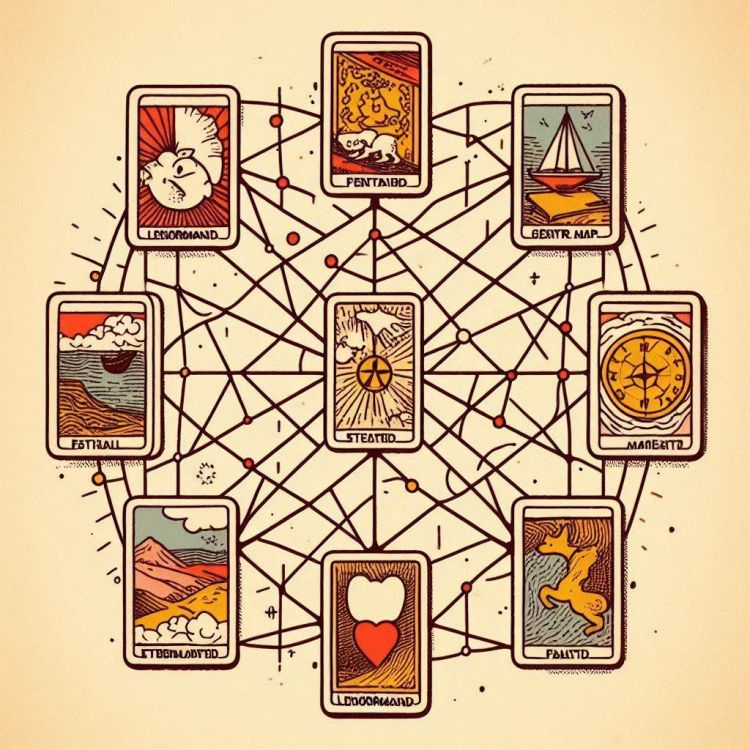
Place this card in the center of the table, then draw 8 other cards that you will place around the Significator to form a tableau of 9 cards in total, arranged in 3 rows and 3 columns. The cards should be arranged as follows:

Card 1 Card 2 Card 3
Card 4 Significator Card 5
Card 6 Card 7 Card 8

You can now practice interpreting the cards around the Significator. Here are some tips to guide you:

  • Horizontal Lines: The cards on the same line as the Significator often tell a story or sequence of events. For example, a line can indicate a situation evolving from an initial state (to the left of the Significator) to a resolution (to the right).
  • Vertical Lines: These cards often describe external or internal influences. The card above the Significator can symbolize aspirations or mental challenges, while those below can reflect subconscious or physical aspects.
  • Diagonals: Diagonals highlight connections or cross influences. They can reveal unexpected paths or subtle relationships between events and people in the spread.

Once the cards are laid out, try to create combinations by linking the Significator to the surrounding cards according to the patterns you have already learned (Noun-Adjective, Subject-Verb, etc.). For example:

  • Horizontal Line: If you have The Rider to the left of the Significator and The Sun to the right, it could indicate "an opportunity that presents itself and leads to great success".
  • Vertical Line: With The Fox above and The Heart below, it could suggest "strategic thinking guided by sincere emotions".
  • Diagonal: If you have The Snake in the top left and The Ship in the bottom right, it can represent "a winding path leading to a change or journey".

Remember to practice regularly and explore different ways of reading the cards to familiarize yourself with the interactions between the Significator and the other cards.

Haut

My Experience with Significators

First, it's better to choose the significators before the reading so that you’re not influenced by the cards that appear and their position in the spread. Even though there are generic significators like The Gentleman or The Lady, it’s recommended to choose the significator(s) depending on the context of the question. Here are three ways to use significators:

  • 1 - Significators are usually used in the Grand Tableau because all the cards will appear, so the significators will definitely be present. Then, it's very useful to use the column, the row, and the diagonals where the significator is the central point. It's also relevant to interpret the square of nine cards around the significator.

For the other two options, which apply to spreads other than the Grand Tableau, there is the question: "will my significator show up?" That's why using significators in N-card spreads is less common. So there are two points of view:

  • 2 - The significator is seen as a card like any other and may not appear. If it shows up, great, and we use it just like in the Grand Tableau. If it doesn’t, we accept that and include it in the interpretation. For example: if I ask "is my husband cheating on me?", I can choose the Snake as the significator of the potential lover before drawing the cards. If the Snake card appears, that could mean the querent's doubts are justified. I would then look at the other cards in the spread to put the Snake in context and see whether the presence of a lover is confirmed or not. If the Snake card does not appear, I might think there is no infidelity, but I’ll still look at the drawn cards, because there might be an issue in the couple even if nothing has happened yet.
  • 3 - You definitely want to have the significator(s) because it helps to structure the spread. In this case, you draw out one or more significator cards and place them in front of you. Then you determine the placement of the other cards. For example, you can put the significator card in the center of a nine-card square and draw eight cards around it. You can also place the significator card in the center of a five-card line spread and draw four cards, two on the left and two on the right. If you have two significator cards, you can place each significator at one end of a five-card line and draw three cards in the middle. In this situation, the significator cards play a structuring role rather than an interpretive one (since they were deliberately placed). The significators set a frame within which the drawn cards are interpreted. Naturally, significators will also be part of the associations you make to interpret the reading. For example, for the question "will I pass my exam?", I can choose the Letter card as the significator of the exam and place it at the center of a five-card spread. I can structure the reading by saying the two cards on the left represent the 'Against', and the two cards on the right the 'For'. Be careful, the Petit Lenormand doesn't always work well with fixed card positions because of how the associations can be made in all directions, so you should structure your spread or not depending on your own habits and preferences. For learning, you should try all the methods and see which one suits you best.

Personally, with the Petit Lenormand, I do 70% Grand Tableaux, 20% nine-card squares, and 10% quick spreads with three or five cards. I always use significator cards in my Grand Tableaux. I sometimes use one or two significators (pre-drawn or not) for the nine-card square. And I never use significators for my quick spreads. Of course, this is not a strict rule! 😄

Haut

Common Mistakes to Avoid

When working with a Significator in a Petit Lenormand spread, it is easy to fall into certain traps, especially if you are a beginner. Here are some common mistakes to avoid to ensure smooth and nuanced readings.

1. Do Not Be Too Rigid in Choosing the Significator

It is important to remember that the Significator is flexible and can change depending on the context of the question. Do not feel obliged to always choose the traditional cards (e.g., 28 - The Gentleman or 29 - The Lady). Depending on the theme of the question, it may be more relevant to use a different card like The Heart for a love question or The Anchor for a question about professional stability. Staying flexible in your choice will allow you to obtain more focused and thus more suitable readings for each situation.

2. Do Not Forget That There Can Be Multiple Significators

In some complex spreads or when exploring multiple aspects of the same situation, it is perfectly acceptable to have multiple Significators. For example, in a love spread, The Heart can represent the emotional aspect of the relationship, while The Ring can represent commitment. This allows you to better explore the different angles of the same question. Do not limit your spread to a single focal point if multiple aspects of the question deserve to be explored.

3. Do Not Focus Solely on the Significator

Even though the Significator is a central card in the spread, it is essential not to overlook the overall context of the spread. Each card has a role to play, and sometimes another card in a combination can take on a temporary role as a "local Significator". For example, in a 3-card combination, even if you have designated a main Significator, a card like The Fox in the middle position could become the focal point for that specific combination, revealing a more significant influence in that particular context.

Interpreting the Petit Lenormand is a dynamic exercise. The cards influence each other, and the Significator should be seen as a compass that guides the reading, without centering everything solely around it. Take a step back to consider the entire spread and the interactions between all the cards.

CONCLUSION

The choice of the Significator is a key step in the practice of Petit Lenormand, as it provides a focal point for your reading. Choosing this card well allows you to better structure your reading and adapt your interpretation to the question asked. Remember that it is possible to have multiple Significators within the same spread, each acting as a guide for specific aspects. These cards then become central points around which combinations of 2 to 5 cards are articulated, enriching your interpretations.

The Significator is a valuable tool, but it must be used flexibly and in connection with the overall context of the spread. Learn to adapt to each situation, and let the interaction between the cards guide you to clearer and more nuanced answers.

Be flexible in choosing your Significator, do not hesitate to use multiple if necessary, and above all, do not focus solely on it to the detriment of the rest of the spread. Each card plays a role in the story told by the Petit Lenormand, and the balance between all the cards is the key to rich and nuanced interpretations.

In the next article, we will discuss the "near" and "far" method, an essential technique for understanding the impact of the distance between cards in a spread, especially in the Grand Tableau. You will discover how the proximity or distance of the cards from the Significator greatly influences the interpretation of upcoming events.

To further your discovery of the Petit Lenormand, I invite you to read my next article =

[✊ Learn Petit Lenormand : The "near" and "far" method (5/7) ! ✊]

To go further, continue your reading with ...

Comments

Subscribe to the newsletter :